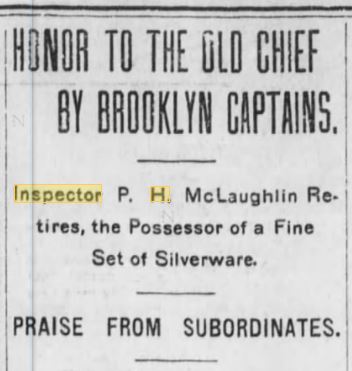
The Brooklyn Daily Eagle May 1, 1905
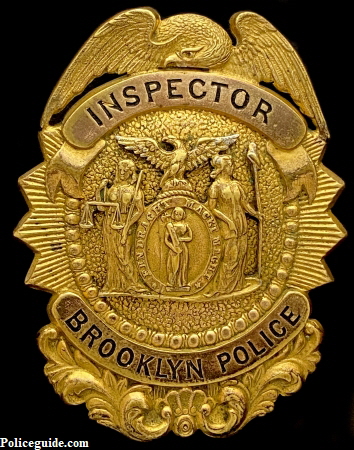
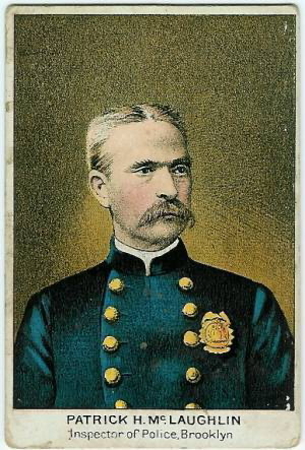
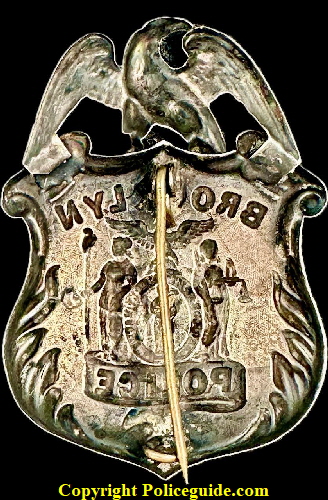
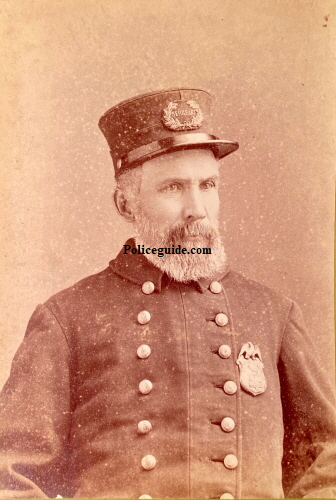
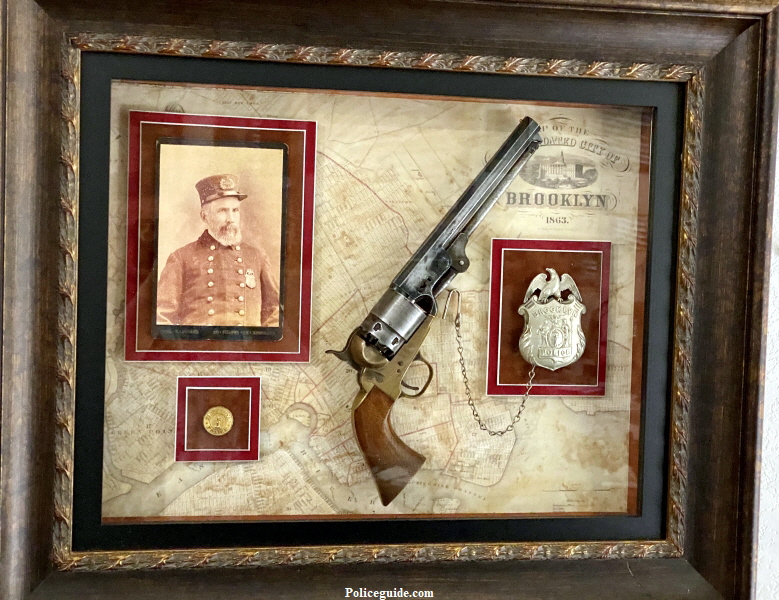
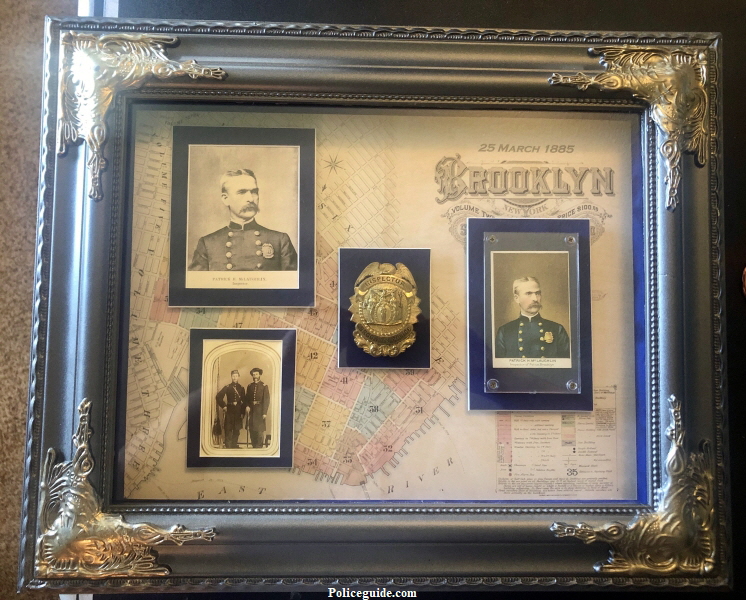
Brooklyn Police Inspector Badge issued in 1881 to Patrick H. Mc Laughlin. July 1886. Only 3 Inspectors wore this style badge making it the rarest Brooklyn badge on this page. More articles on Mc Laughlin below. SKU007741
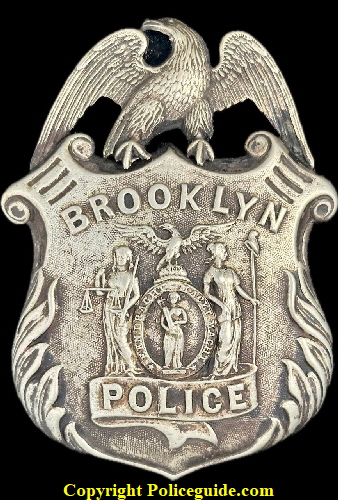
Brooklyn Sergeant Badge issued in 1870,
post Metropolitan era. SKU12295
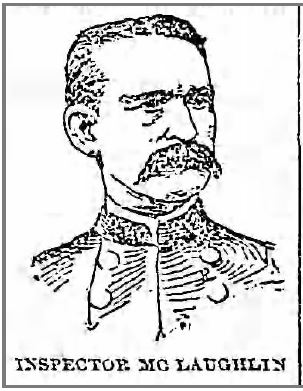
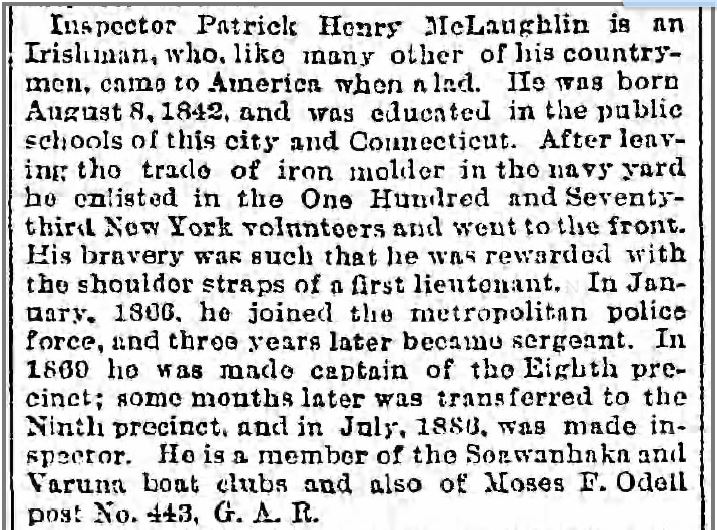
The Brooklyn Daily Eagle
September 24, 1893
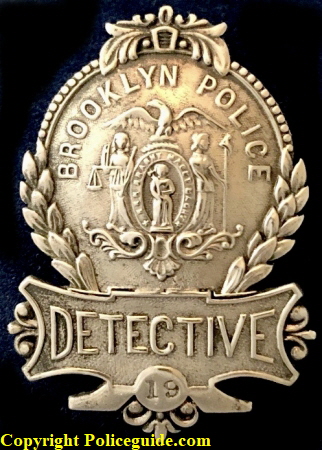
Brooklyn Police Detective Badge #19 issued in 1881 to Edmund Brown who promoted to Sergeant very quickly. SKU6116
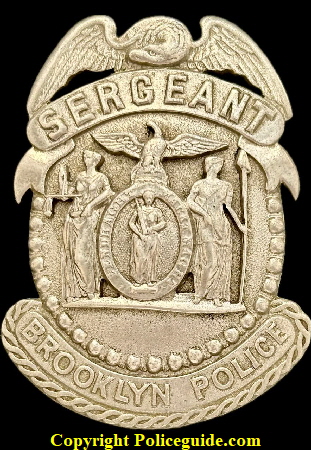
Brooklyn Sergeant worn from 1888 - 1898, made by S. A. French N. Y. SKU7112
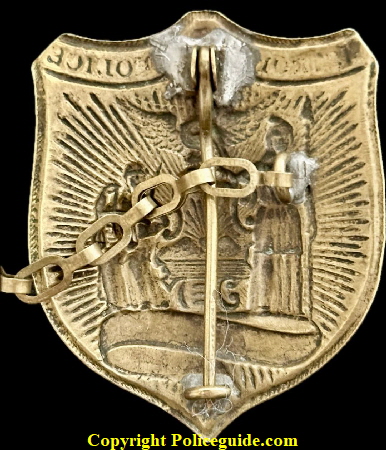
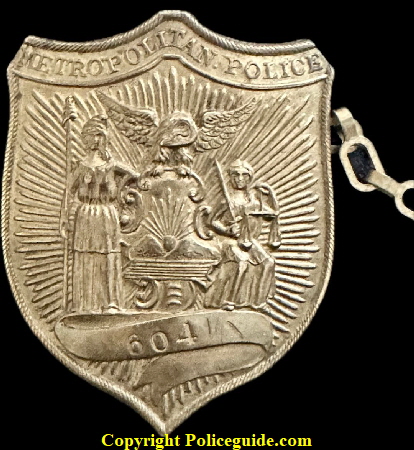
Brooklyn Metropolitan Police shield 604.

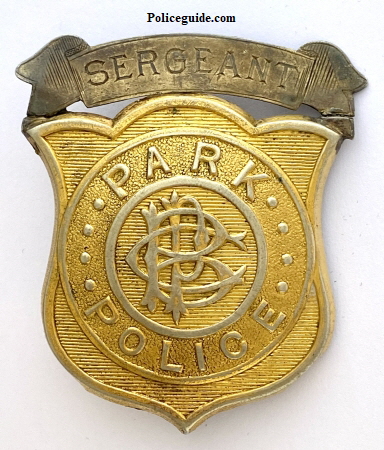
This Brooklyn Park Police Sergeants badge is an example of the badges worn by the officers patrolling the 526 acre Prospect Park. The park's police force was established in 1866. According to the Brooklyn Daily Eagle its mission was "to guard the property now on the ground, and hereafter promote the observance of the peace and respect for the improvements when the Park shall become a public resort." The original force consisted of nine patrolmen, three sergeants, and a captain. In the following photo from 195, patrolman John O'Hara warns Donald Boa of the dangers from skating on Prospect Park Lake. SKU3871
Badge collectors can’t think of Brooklyn badges without thinking of Art Sinai. This is a picture of Art at the Brooklyn Public Library giving a talk on Brooklyn badges. Some of the badges on this page were once owned by Art.
Maybe all of them at one time.
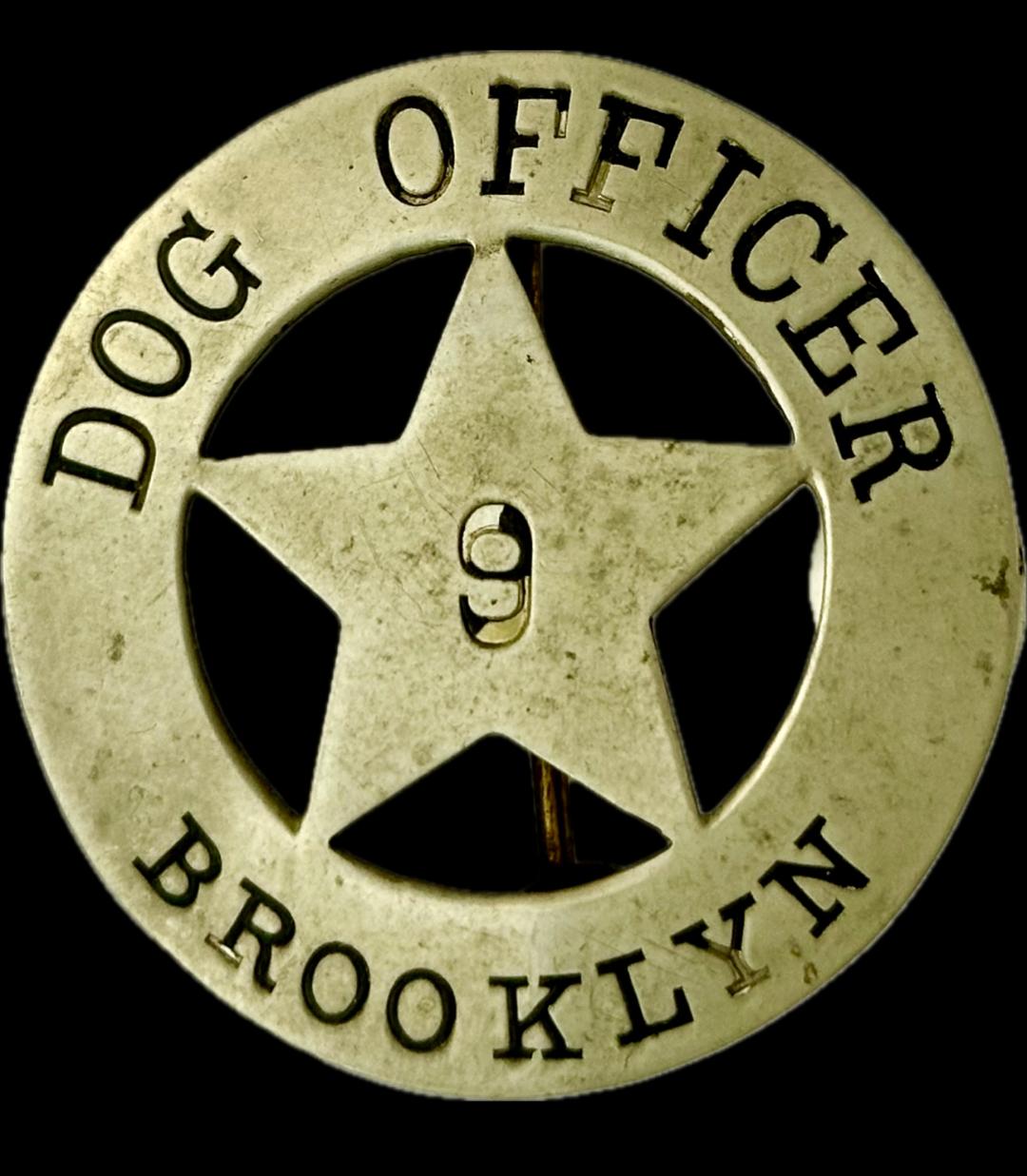
Police Departments that were in cities that were merged into the City of Brooklyn.
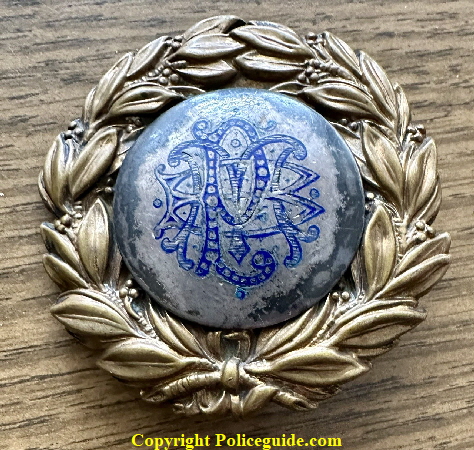
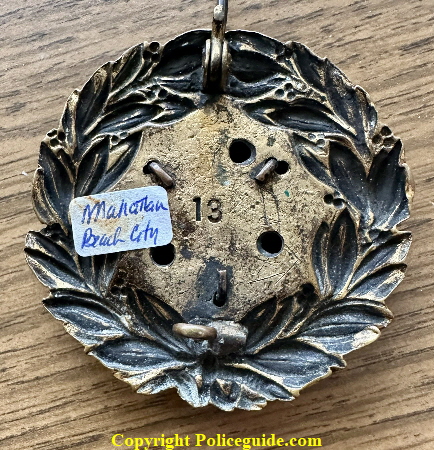
Manhattan Beach Police shield with a center seal featuring the monogram MBP. Stamped 13 on the reverse.
Manhattan Beach was the most upscale of the three major resort areas that developed at Coney Island shortly after the American Civil War; the other two areas were Brighton Beach and West Brighton. Manhattan Beach (in what is now Brooklyn’s Community District 15) originated as an upscale seaside resort area developed in the 1870s by Austin Corbin (Long Island Rail Road president). It was part of the Town of Gravesend (later annexed by the City of Brooklyn), not a separately incorporated city. It never had its own independent municipal government or full-fledged city police department. Private “Manhattan Beach Police Force” (1870s–1890s): The resort (including the Manhattan Beach Hotel and Oriental Hotel) maintained its own security/police presence, often described in contemporary newspapers as an “efficient Manhattan Beach police force.” This was a uniformed squad (around 24 officers at times), drilled in a military style, with assigned stations (e.g., at railroad entrances). It was linked to Pinkerton detectives and included captains like James A. Wilkeson (late 1870s), Curtin (1880), and others, plus detectives.
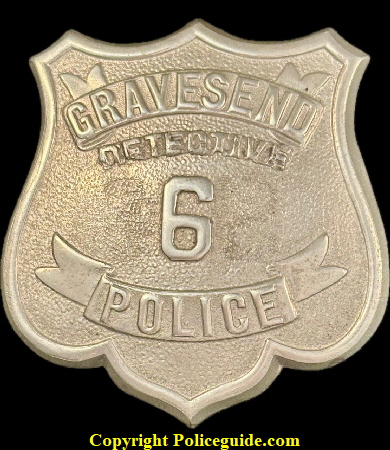
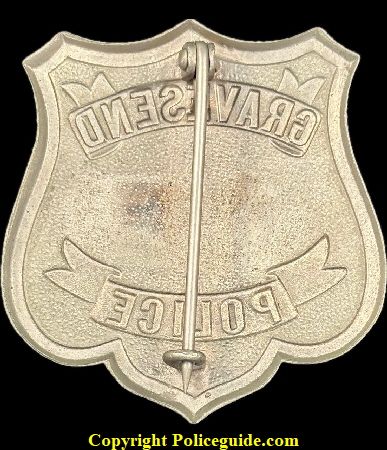
Gravesend Police Detective shield.
Gravesend was one of the original towns in the Dutch colony of New Netherland. After the English took over, it was one of the six original towns of Kings County in colonial New York. Gravesend was the only English chartered town in what became Kings County and is notable as being one of the first towns founded by a woman, Deborah, Lady Moody. The town of Gravesend encompassed 7,000 acres (2,800 ha) in southern Kings County, including the entire peninsula of Coney Island, and was annexed by the City of Brooklyn in 1894.
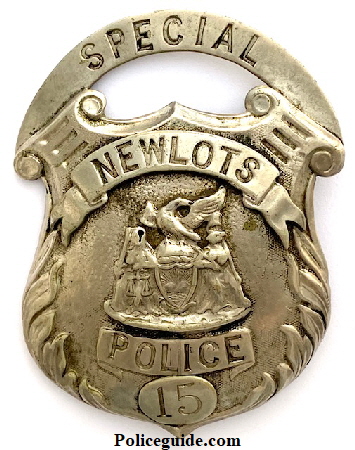
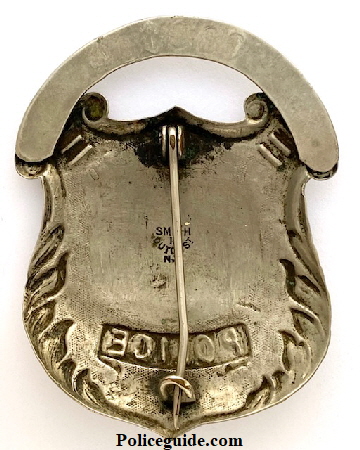
New Lots Police Special badge No. 15. Town of New Lots existed from 1852 when the area seceded from Flatbush until it was annexed in 1886 as the 26th Ward of Brooklyn.
Obtained from the Art Sinai Collection. SKU4664
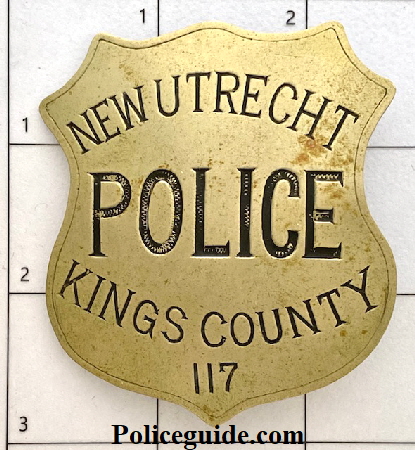
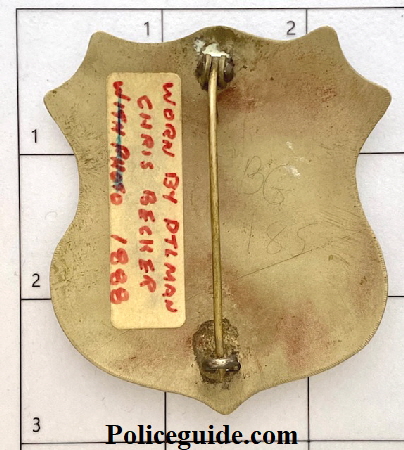
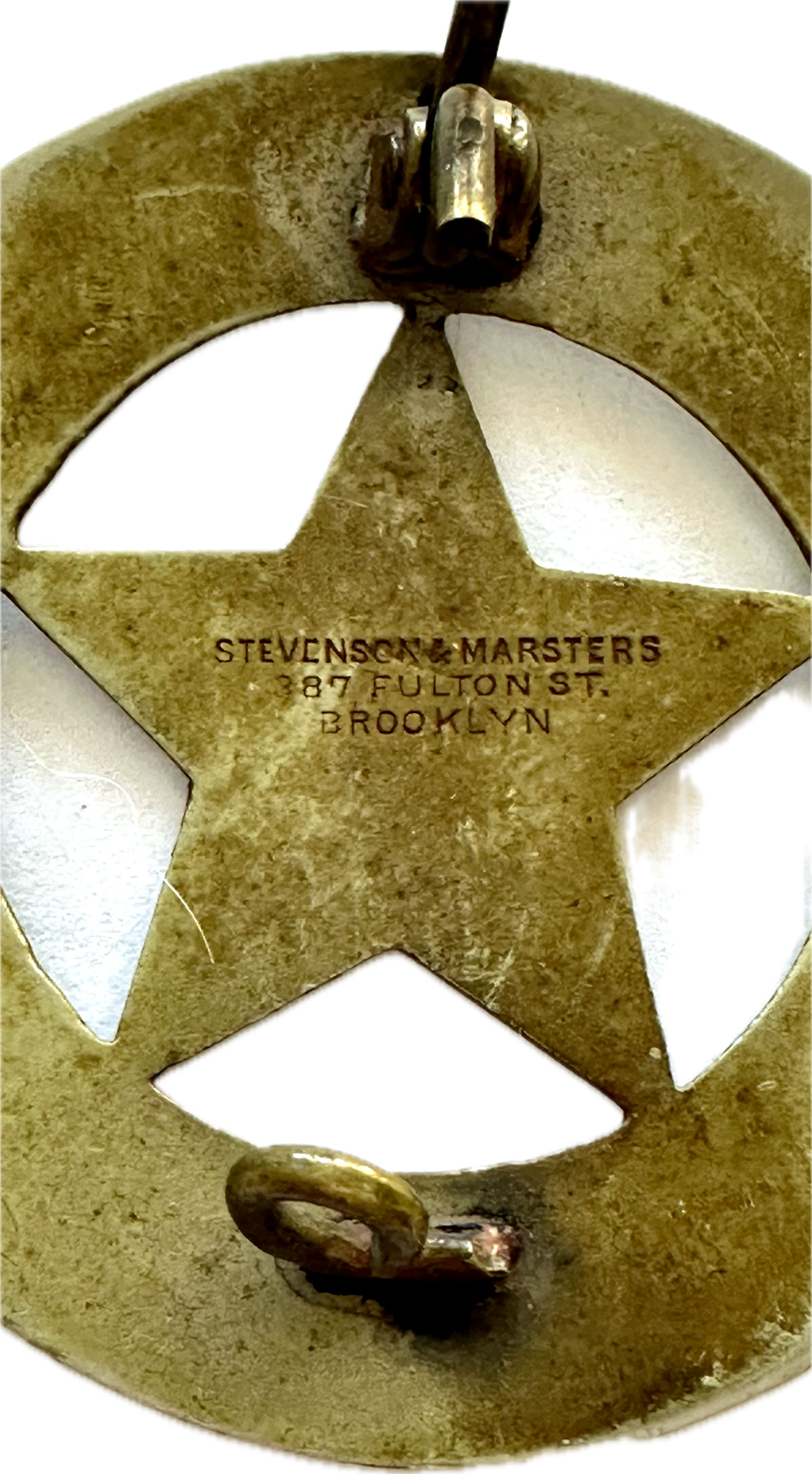
New Utrecht badge #117 worn by Patrolman Chris Becker 1888. Obtained from the Art Sinai Collection. SKU4662
Back of New Utrecht Police Badge #117 worn by Patrolman Chris Becker 1888.
New Utrecht (Dutch: Nieuw Utrecht) was a town in western Long Island, New York encompassing all or part of the present-day Bath Beach, Bay Ridge, Bensonhurst, Borough Park, Dyker Heights and Fort Hamilton neighborhoods of Brooklyn, New York City. New Utrecht was established in 1652 by Dutch settlers in the Dutch colony of New Netherland, the last of the original six towns to be founded in Kings County. New Utrecht ceased to exist in 1894 when it was annexed by the City of Brooklyn, and became part of the City of Greater New York when Brooklyn joined as a borough in 1898.
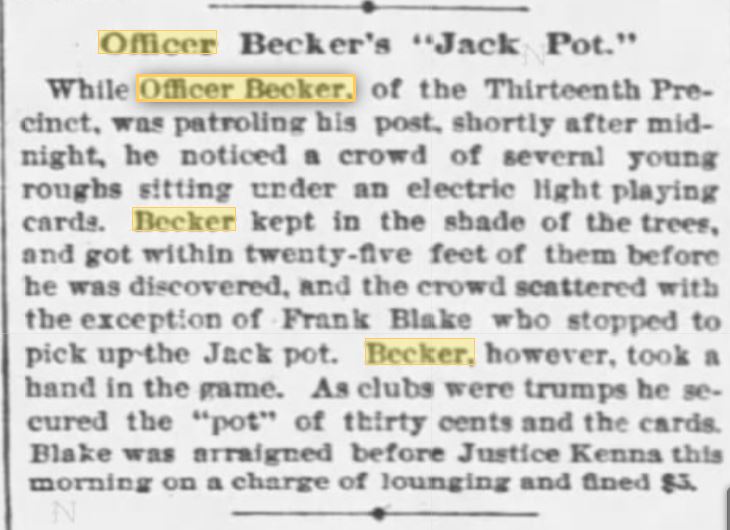
The Standard Union Brooklyn September 8, 1887
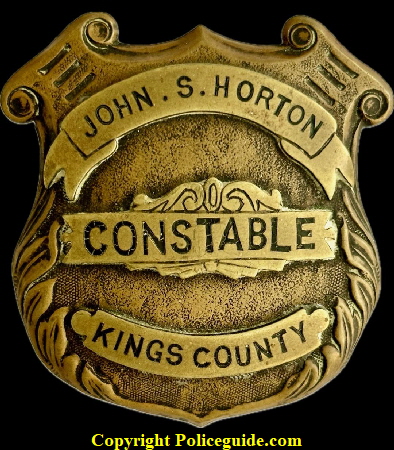
John S. Horton, Constable Kings County shield, circa 1887, Brooklyn, N.Y.



Jim Casey’s Policeguide.com
If you have a badge or a collection of badges and are interested in selling them, please contact me.

Your Guide to Forgotten Badgess